AFSR, the French-Swedish Association for Research, is proud to present the recipients of the association’s fellowships for the academic year of 2026-27. A key ambition for AFSR since the association’s inception almost 60 years ago has been to stimulate and enhance research collaboration between France and Sweden. The fellowships, which were established three years ago, have turned out to be a successful way of realizing this ambition which is illustrated by a steadily increasing number of qualified applications within all disciplinary fields
The four recipients of AFSR’s 2026/27 fellowships are:
- Dr Justine Habault, Inserm, the National Institute of Health and Medical Research, Paris
- Dr Dmytro Vasiukov, IMT Nord, École Mines-Télécom, IMT Université de Lille
- Dr Sarah Bagot, Institut Lyfe Research Center, Ecully
- Dr Fredrik Thomasson, Department of History, Uppsala University
Below follows the laureates own presentations of their award-winning projects.
Dr Justine Habault, Inserm/Institut de Recherche Saint-Louis, Paris
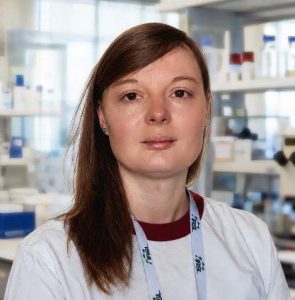
Dr Justine Habault is a postdoctoral researcher in translational oncology at Inserm/Institut de Recherche Saint-Louis in Paris. Her AFSR fellowship project aims to develop new therapeutic strategies against c-MYC-driven cancers by targeting c-MYC expression at the level of mRNA translation.
c-MYC is a major driver of tumor development but remains difficult to inhibit directly. Building on strong preclinical evidence, the project will investigate how the MDM2-binding compound Milademetan suppresses c-MYC protein synthesis independently of p53, through modulation of MDM2 interaction with the c-MYC mRNA. This mechanism opens a new therapeutic perspective for aggressive tumors, including p53-deficient cancers that are poorly responsive to current MDM2-targeting approaches.
The project will be carried out through a collaboration between Inserm in France and Umeå University in Sweden, combining molecular biology, cancer models, spatial transcriptomics, proteomics, and structure-function analyses. By defining how MDM2 can be pharmacologically redirected toward oncogene translation control, this work aims to guide the development of improved compounds and strengthen long-term Franco-Swedish collaborations in translational cancer research.
Dr Dmytro Vasiukov, Associate Professor at the Centre for Materials and Processes at IMT Europe
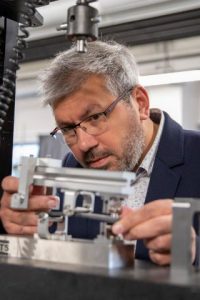
Modeling and in-situ observation of cOhesive mixed mode fRacture of interlayers in 3D printed structures for ProtHesis (MORPH).
Dr. Dmytro Vasiukov specializes in mechanics and multiscale modeling of damage in heterogeneous materials and hybrid structures. He will collaborate with Dr. Anders Biel and Dr. Anton Tkachuk, both Associate Professors at the Department of Engineering and Physics at Karlstad University.
Advanced manufacturing technologies such as Additive Manufacturing (AM) and laser welding enable the production of highly customized and complex components, including medical prostheses and protective structures. However, the reliability of these parts strongly depends on the adhesion between deposited layers, while current fracture characterization methods remain limited to simple loading modes.
In real applications, components are exposed to complex three-dimensional loading conditions. Prosthetic limbs, for example, experience combined opening, sliding, and twisting forces during bending or pivoting motions. Accurately characterizing these mixedmode interactions, particularly Mode I/III coupling, is therefore essential for predicting structural failure during dynamic human motion.
The MORPH project addresses these challenges by combining advanced experimental techniques with multiscale numerical modeling. It will develop new protocols for mixed-mode interlayer fracture, where no ISO standards currently exist, and integrate Cohesive Zone Modeling (CZM) and Phase-Field approaches. The project also considers manufacturing effects such as anisotropy, cooling rates, and polymer chain reptation to improve failure prediction in additively manufactured structures.
Dr Sarah Bagot, Centre de Recherche de l'Institut Lyfe, Ecully

Towards Personalized Nutrition – Understanding Why We Respond Differently to the Same Foods
Diet is a major driver of cardiovascular disease and type 2 diabetes, yet standard dietary guidelines have had limited impact, partly because individuals respond very differently to identical foods. This fellowship, hosted at Chalmers University (Gothenburg) in Professor Rikard Landberg's group, will investigate the determinants of these inter-individual differences within SCAPIS2-HOME, one of the largest precision nutrition studies, involving over 4,000 deeply phenotyped Swedish adults.
Using continuous glucose monitoring, standardized dietary challenges, dietary assessment, and gut microbiota profiling, the project will characterize glycemic trajectories in response to dietary challenges, identify dietary and behavioral determinants, and relate these dynamic responses to cardiometabolic risk markers (plaque burden, hepatic steatosis, pre-diabetic status). By moving beyond static fasting biomarkers, this work aims to refine risk stratification and inform personalized nutrition strategies.
This fellowship also marks the beginning of a structured Franco-Swedish collaboration between Institut Lyfe Research Center (Lyon) and Chalmers University, with prospects for joint publications, grant applications, and researcher mobility.
Dr Fredrik Thomasson, lecturer at the History department of Uppsala University
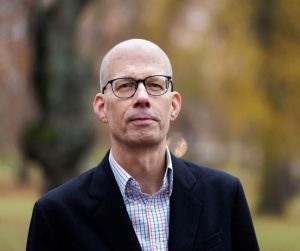
La Perle Blanche des Antilles or Franco-Swedish Double Amnesia: Investigating the Memory of Slavery in the Jet-Set-Fiscal-Haven-Saint-Barthélemy
I am presently principal investigator of the ERC (European Research Council) funded project SAINTBARTH [101089015].
My project examines the amnesia surrounding slavery on the Caribbean island of Saint-Barthélemy. St. Barths is today France’s only tax haven, attracting global elites. It was a Swedish colony (1784–1878), and its fiscal status stems from this period. The project argues that both Sweden and France have marginalized or erased the memory of slavery at Saint-Barthélemy.
The study aims to explain how this erasure occurred and how it relates to present-day issues such as tax evasion, segregation, and debates on reparations. It seeks to move beyond polarized interpretations in postcolonial scholarship by linking historical processes to contemporary discourse.
Methodologically, the project combines archival research, legal and legislative analysis, and interviews with key actors (politicians, administrators, historians) in France, Sweden, and Saint-Barthélemy.
Hosted at Université de Paris, the project will result in publications and public outreach, including dissemination on Saint-Barthélemy itself. It contributes to the understanding of how colonial history is remembered, neglected, or reshaped in relation to contemporary global issues.